
Safe, mercury-free mechanical sensor design






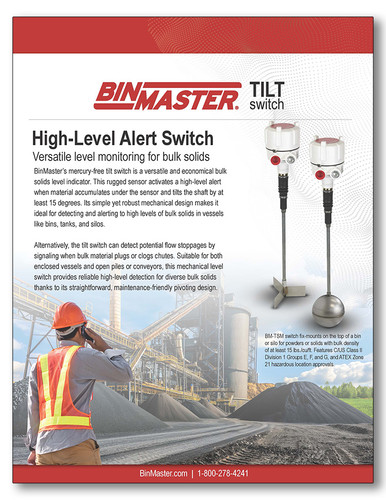
A tilt switch level sensor detects rising levels of bulk solids and powders by sensing when the device tilts from contact with material. BinMaster tilt switches activate an alarm when the sensor tilts approximately 15 degrees, signaling that material has reached a predetermined level.
These rugged electromechanical sensors are commonly used for high-level detection in silos, plugged chute detection, conveyor belt overload protection, and pile monitoring.
Tilt switches are a simple, economical solution for monitoring bulk materials with a bulk density of 15 lb./ft.³ or greater. When the sensor tilts, it triggers a relay that can activate a light, horn, alarm panel, or control system.
BinMaster tilt switches are available in fixed-mount or hanging configurations, with options for hazardous location approvals and mercury-free operation.
While designed for different installation styles and applications, both models detect solids and powders with bulk densities of 15 lb./ft.³ or greater.
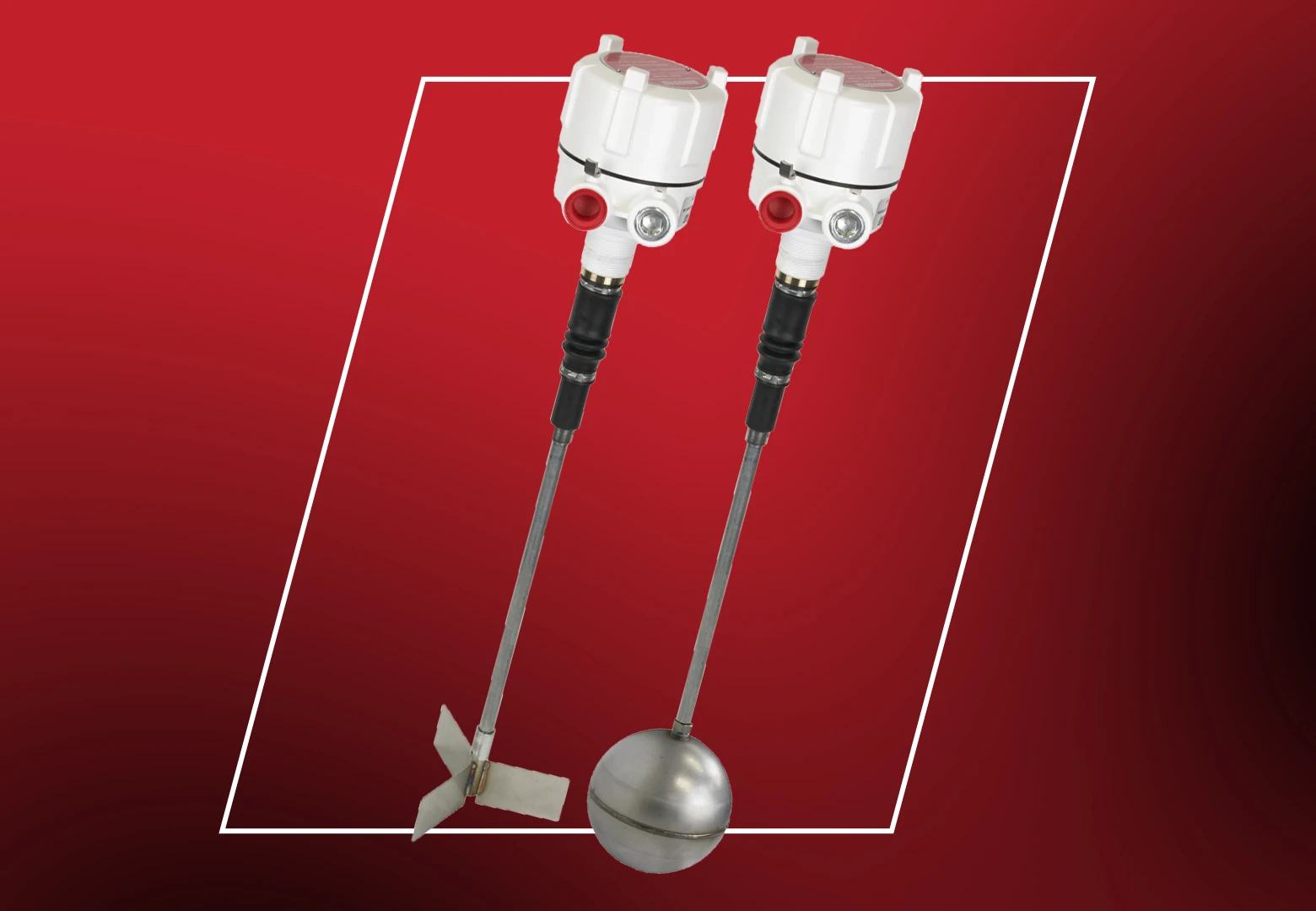
Ideal for installation on the top of bins or silos.

Suspended above piles, conveyors, or open areas.
Tilt switches provide simple, dependable level detection because they rely on mechanical movement rather than complex electronics.
They detect material presence by sensing when the sensor paddle or sphere tilts due to material contact.
Once the material level drops and the switch returns to its original position, the sensor resets and is ready for the next detection cycle.

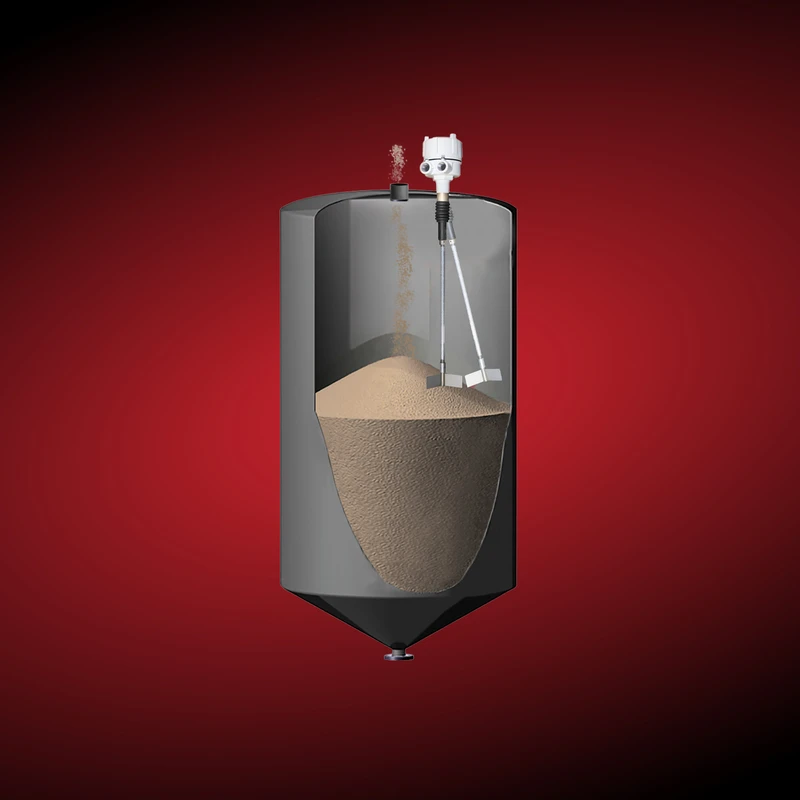
The BM-TSM tilt switch is a stationary, mercury-free sensor designed for fixed mounting on top of bins and silos. Its pendulum-style shaft and probe detect rising material levels and activate a switch when tilted.
Patented Motion-Sensing Design
The BM-TSM uses a patented actuator assembly that senses angular motion. When the sensing probe tilts 15 degrees, it activates a microswitch that closes an electrical contact.
This signal can be used to trigger a high-level alarm, activate a warning light or horn, or send a signal to a control system.

Each BM-TSM tilt switch is manufactured to your operational needs in BinMaster’s Lincoln, Nebraska facility.
The probe shaft can be built in lengths from 1–8 feet, allowing the sensor to perform at the exact level required.
Optional probe styles include a paddle probe and a sphere probe.
The BM-TSM sensor is suitable for hazardous environments. It includes several approvals:
C/US Class II, Division I Groups E, F, & G
ATEX Zone 21 certification
The BM-TSM installs through a 1¼-inch process connection on the top of the bin.
Mounting options include a 0°, 10°, or 30° mounting plate to ensure proper installation on flat or angled bin roofs.
Safe, mercury-free mechanical sensor design

Installs through a standard 1¼-inch process connection

Cost-efficient installation, as no electrical wiring is required inside the bin

Suitable for solids and powders with a bulk density above 15 lb./ft.³

Hazardous location approvals available, including Class II and ATEX

Can activate alarms, lights, horns, or control systems

The BM-T tilt switch is designed to be suspended above a target location such as a material pile, conveyor belt, or chute.
When material reaches the probe and tilts the shaft at least 15 degrees, the internal switch activates an alarm or a control signal.
Because it hangs freely, the BM-T can function as a load sensor that detects material buildup or process blockages in grains, sand, coal, gravel, aggregate, concrete, and more.

Standard, rugged mechanical tilt switch provides a long service life in ordinary locations

Offers suspended installation above a monitored location such as conveyors, chutes, or open piles
Activates alarm, light, or horn when tilted 15° or more; easily integrates into control systems

Tilt switches provide a simple and economical solution for detecting bulk material levels. Their advantages include:
Tilt switch sensors are especially useful when a facility needs basic limit or high-level detection in a simple level measurement sensor.
Tilt switches are widely used for simple, dependable point-level detection in bulk material handling operations for many industries.

High-Level Detection
Mount above bins or silos to alert operators when materials reach a pre-determined level.

Plugged Chute Detection
Install in chutes or transfer points to detect material blockages.

Conveyor Belt Monitoring
Suspend above conveyor belts to detect material overload conditions.

Pile Monitoring
Use over open stockpiles to detect when material reaches a specified height.

Both tilt switches and rotary paddle level indicators are commonly used for point-level detection in bulk solids applications.
Choose tilt switch sensors when:
Utilize rotary level switches when:
BinMaster also offers vibrating probe and capacitance point-level detection technologies. Selecting the best device depends on vessel configuration, material characteristics, and the required detection point.