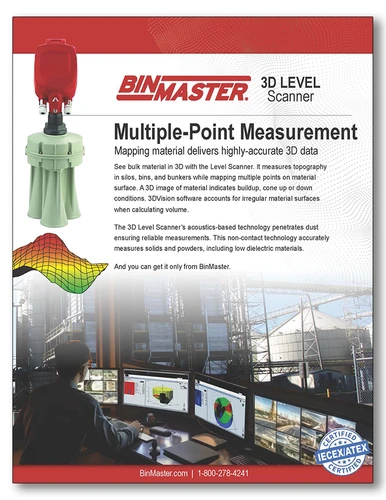

Generates a 3D image of material topography






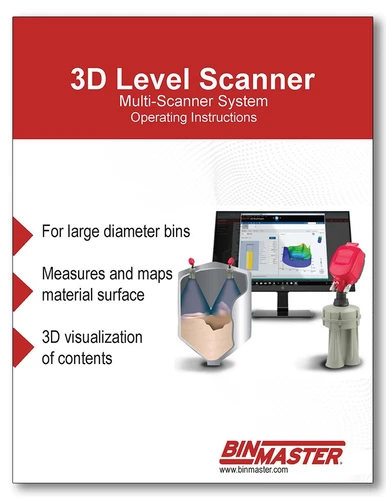
The BinMaster 3D Level Scanner is the only level measurement technology that maps multiple points across the material surface to create a 3D representation of stored material inside a silo or bin. After measuring multiple points, the scanner generates an accurate image of the material's surface topography and calculates the volume, even when the surface is irregular.
Unlike single-point level sensors, the 3D Level Scanner identifies cone-up or cone-down conditions, sidewall buildup, and uneven material distribution that can affect inventory accuracy and silo safety. Using acoustic technology, the sensor penetrates dust and measures solids and powders—including low dielectric materials—without contacting the material.
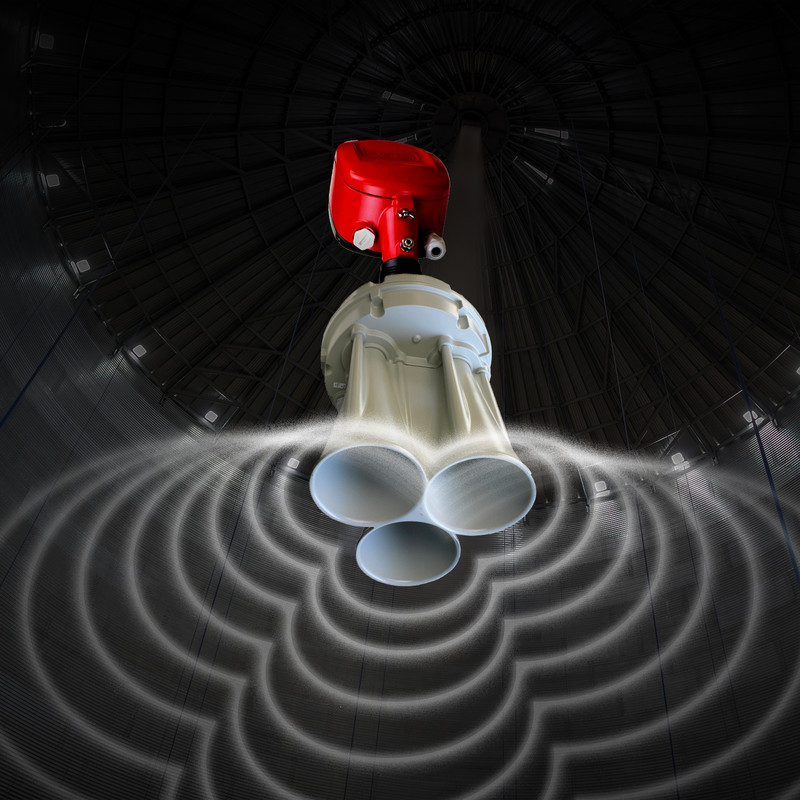
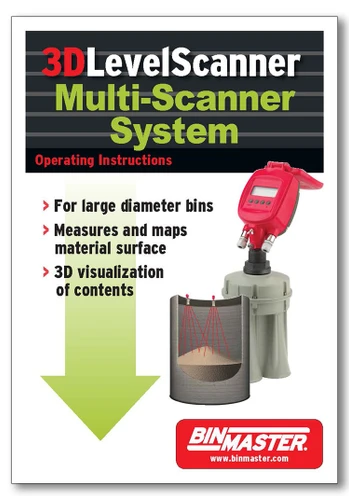
The 3D Level Scanner uses advanced acoustic technology to measure multiple points on the material surface inside a bin or silo.
Three transducers emit extremely low-frequency sound waves that travel through the vessel and reflect off the material surface. The sound is faint, similar to a chirp.
Echoes returning from multiple points on the material surface are received and converted into distance measurements.
Advanced algorithms assign XYZ coordinates to each measurement point. These coordinates are mapped into a 3D model of the material surface.
When used with optional visualization software, the system produces a 3D graphical representation of the bin contents, allowing processors to see surface variations and accurately report volume.
BinMaster's 3DLevelScanner sensor measures multiple points across the material surface, providing greater volume accuracy than single-point sensors.
Generates a 3D image of material topography

Reports minimum, maximum, and average material levels

Detects cone-up and cone-down conditions

Identifies sidewall buildup that may cause structural stress

Measures bulk materials in segmented or compartmented bins

Supports accurate inventory calculations in large-diameter silos using multiple scanners
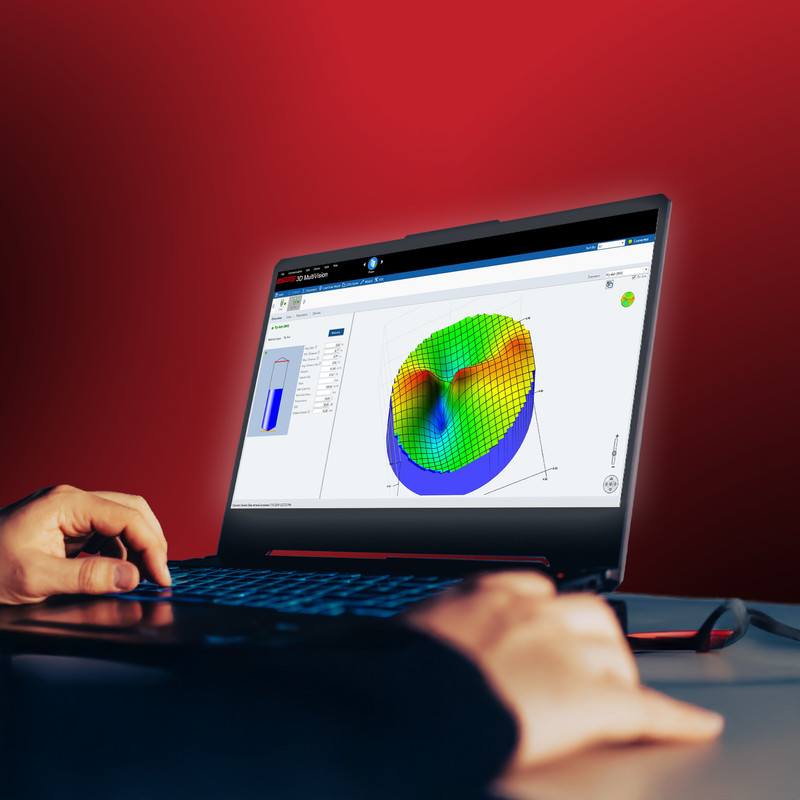
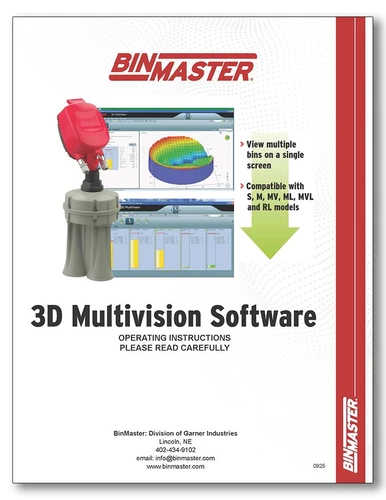
MultiVision software provides centralized inventory monitoring for facilities using 3D Level Scanners.
Installed on a local network, the software allows operators to monitor multiple bins simultaneously and view real-time inventory information.
Users can easily switch between bins, view detailed level data, and examine the 3D profile of the stored material with a single click.
The 3D Level Scanner excels in industries where dust, irregular material surfaces, or large storage vessels make single-point level measurement inaccurate.

Grain, Seed, & Feed
Corn, soybeans, wheat, rice, milo, and other grains used in human and animal food production.

Construction Materials
Silos storing gypsum, roofing granules, and drywall materials.

Chemical Processing
Powders and bulk solids used in manufacturing paints, fertilizers, detergents, and industrial chemicals.

Mining & Metals
Dusty materials such as bauxite, bentonite, alumina, potash, talc, and calcium carbonate.

Ethanol & Bioenergy
Accurate measurement of corn storage and dried distiller’s grains (DDGS).

Pulp, Paper, & Wood
Wood pellets, biomass, wood chips, and sawdust used in paper production and biofuels.

Cement & Concrete
Measurement of limestone, aggregates, clinker, sand, and finished cement.

Food Processing
Fine or dusty ingredients such as flour, sugar, salt, cocoa, and other powdered ingredients.

Plastics Manufacturing
Resins including pellets, flakes, and powders with low dielectric properties.

Power Generation
Coal and fly ash silos or electrostatic precipitator (ESP) hoppers.

Sand & Aggregates
Glass manufacturing sand, silica sand, and aggregates.
| Feature | Benefit |
|---|---|
| Dust Penetrating Technology | Reliable operation and measurement in suspended dust |
| Multiple Surface Measurements | Detects uneven surfaces unlike single-point sensors |
| Accurate Volume Calculations | Accounts for irregular material topography |
| Non-Contact Technology | No risk of contamination or interference |
| Detects Silo Buildup | Identifies excessive piling that could stress silo walls |
| Low Maintenance | Self-cleaning transducers resist dusty buildup |
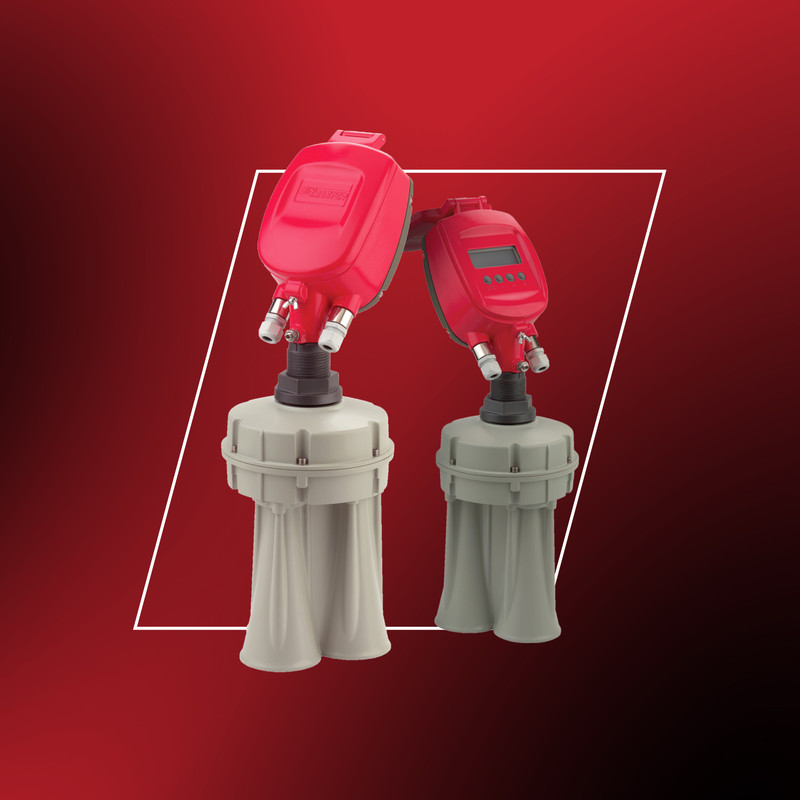
M Model — Maps and Measures
MV Model — Adds 3D Imaging
MVL Model — Large Bin Measurement
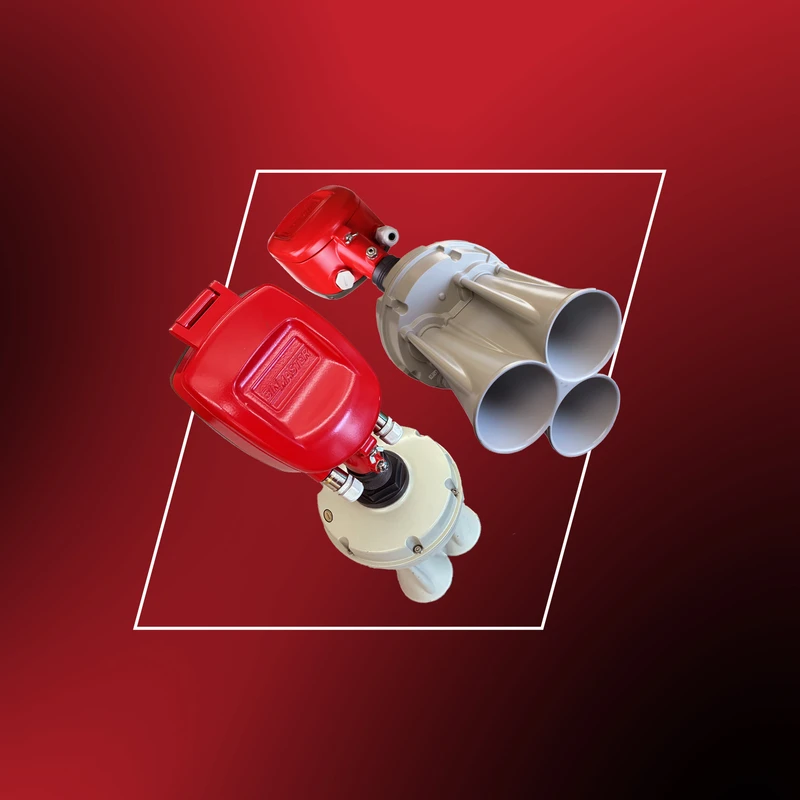
S Model — Average Volume Measurement
RL Model — Single-Point Measurement
HT Model — High Temperature Applications
| Model | M | MV | MVL | S | RL |
|---|---|---|---|---|---|
| Bin Height | Up to 200' tall | Up to 200' tall | Up to 200' tall | Up to 200' tall | Up to 200' tall |
| Bin Diameter | 10’ diameter minimum | 10’ diameter minimum | 10’ diameter minimum | 10’ diameter minimum | 10’ diameter minimum |
| Beam Angle | 70° | 70° | 70° | 30° | 15° |
| 3D Visualization | No | Yes | Yes | No | No |
| Output Data | Volume plus minimum, maximum, and average distance | 3D visualization; volume plus minimum, maximum, and average distance | 3D visualization; volume plus minimum, maximum, and average distance | Average volume | Single distance |
| Best Application | Wide bins, taller than they are wide | Wide bins, taller than they are wide | Very wide bins, bins with multiple filling or discharge points | Narrow silos up to 14’ in diameter | Narrow silos or basic level indication |
** Note: The M and MV can be used on larger diameter bins than specified, but with decreased accuracy, since the beam angle will not span the entire surface. The MVL is used on large diameter bins to increase volume accuracy.
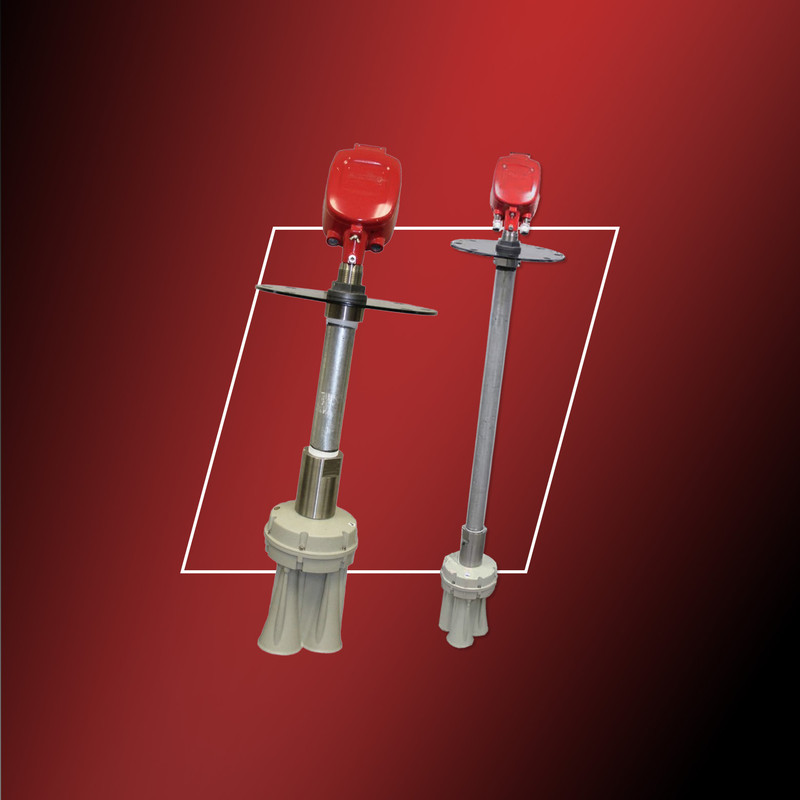
0° Mounting Flange for Flat Silo Roofs
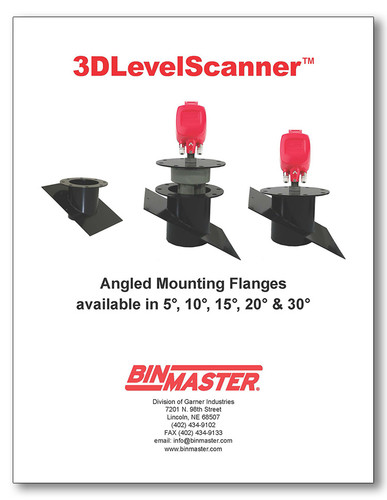
Angled Mounting Flanges for Sloped Bin Roofs
Neck Extensions
| Measurement Characteristics | |
|---|---|
| Frequency | 2 to 10 kH |
| Beam Angle | 15° to 70° |
| Materials, Non-Wetted Parts | |
| Housing | Painted aluminum die casting |
| Inspection Window in Housing Cover | Polycarbonate |
| Antenna | Painted aluminum die casting |
| Flange | Steel |
| Output Variable | |
| Output Signal | 4-20 mA/HART, RS-485, Modbus RTU, TCP/IP |
| Resolution | 10 µA |
| Fault Signal | Current output unchanged, 22 mA > 3.6 mA (adjustable) |
| Current Limitation | 22 mA |
| Load | |
| 4-Wire Sensor | Max. 500 Ohm |
| Weight | 12.3 lb. (5.6 kg) |
| Ambient Conditions | |
| Ambient, Storage, and Transport Temperature | Standard: -40° to +185°F (-40° to 85°C) High Temperature: -40° to +356°F (-40° to 180°C) |
| Relative Humidity | 20% to 85% |
| Altitude | 16,400 ft (5,000 m) |
| Process Conditions | |
| Vessel Pressure | -0.2 to 3 bar (-2.9 to 41.5 psi or -20 to 100 kPa) |
| Process Temperature | |
| Measured on the Process Fitting | Standard: 40° to +185°F (-40° to 85°C) High Temperature: -40° to +356°F (-40° to 180°C) |
| Vibration Resistance | Mechanical vibrations with 2 g and 5 to 200 Hz |
| Electromechanical Data | |
| Cable Entry/Plug | 1 x cable entry M20x1.5 (cable-Ø 8 to 12mm) 1 x blind stopper M20x1.5 OR 2 x cable entry 1/2 NPT |
| Display Panel | |
| LCD | 4 lines x 20 characters |
| Adjustment Elements | 4 keys |
| Protection | IP67 |
| Power Supply – 4-wire instrument (Active) 4-20 mA / HART | |
| Supply Voltage | 20 to 32 VDC |
| Power Consumption | Max. 1.5 W @ 24 VDC |
| Electrical Protective Measures | |
| Protection | IP67, according to IEC 60529 |
| Approvals | |
| CFM Intrinsically Safe Class I, II, Division I, Groups C, D, E, F, G (US & Canada) | |
| CE | |
| EMC | |
| Emission | EN 61326:1997 (Class B) |
| Susceptibility | IEC / EN 61326:1997 + A1:1998 + A2:2001 + A3:2003 |
| NSR (73/23/EWG) | EN 61010-1:2001 |
| FCC | |
| Conformity | To part 15 of the FCC regulations FCC 47 CFR part 15:2007, subpart B, class A |
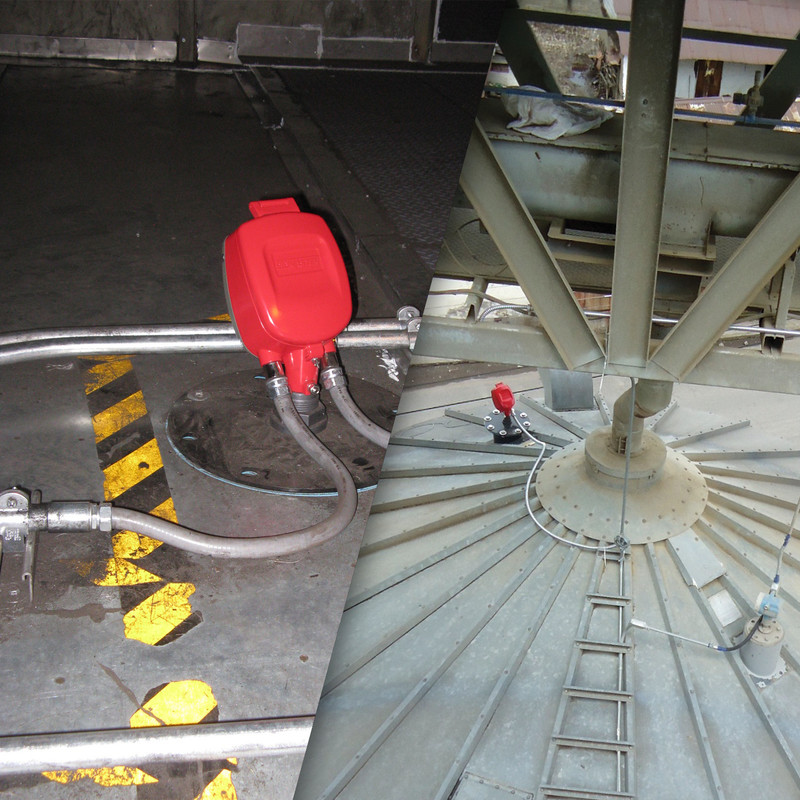
Choosing the right 3D Level Scanner depends on vessel size, material characteristics, and the level of visualization required.
Bin Size and Diameter
Large-diameter silos often require multiple scanners to accurately measure variations across the material surface.
Models like the MVL synchronize data from several sensors to create a complete 3D surface map.
Surface Visualization Needs
Operations with materials that bridge, rat-hole, or build up benefit from models that provide 3D imaging, such as the MV model.
Measurement Detail Required
Some applications only require average volume measurement. Others need detailed analysis of material distribution.
M or S models provide accurate level/volume data without full 3D visualization.
Environmental Conditions
High temperatures, dust, and abrasive materials may require specialized models.
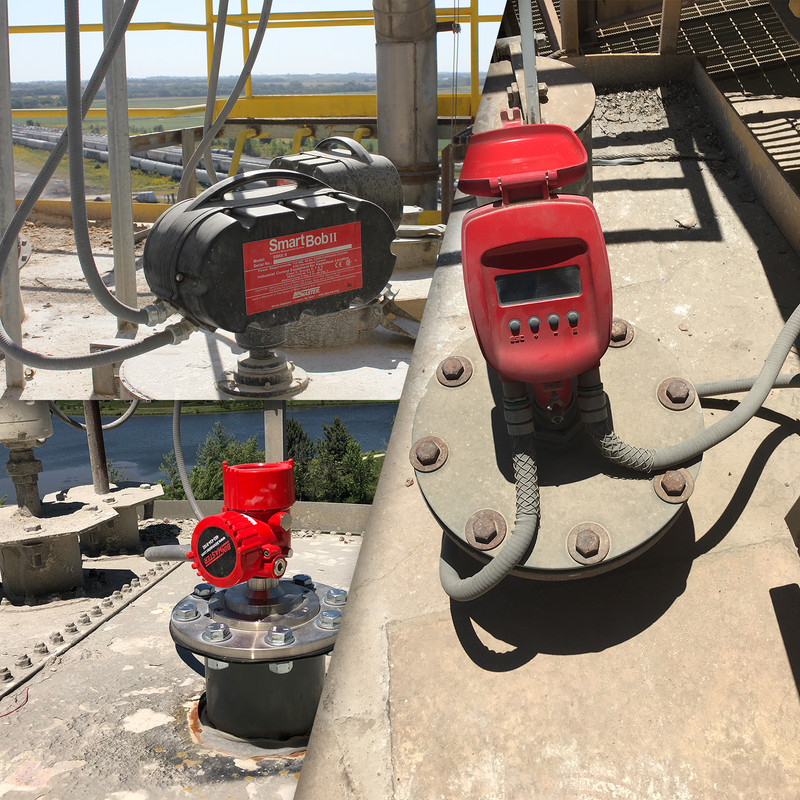
A 3D Level Scanner is often selected when operators need the most accurate inventory calculation in bins with uneven material surfaces.
Use non-contact radar sensors when:
Use SmartBob® sensors when:
BinMaster offers multiple continuous and point level technologies, allowing facilities to select the best solution for their bin size, material characteristics, and inventory accuracy requirements.