
Measures through dust or airborne particles in the vessel




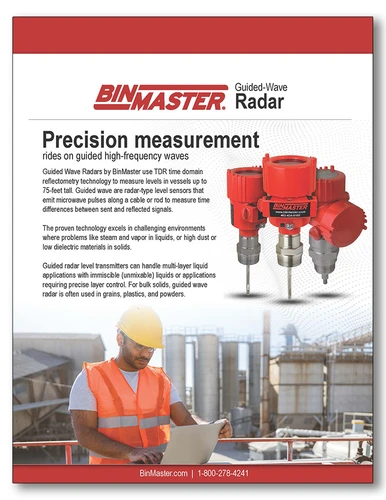
BinMaster guided wave radar (GWR) level transmitters provide highly accurate, continuous level measurement in bins, tanks, and silos using time domain reflectometry (TDR) technology.
By sending microwave pulses along a guided cable or rod probe, these sensors precisely measure the distance to the material surface to determine level and volume.
Guided wave radar sensors are well suited for powders, pellets, granules, and liquids, even in challenging process environments with temperature changes, pressure, dust, condensation, or vapors.

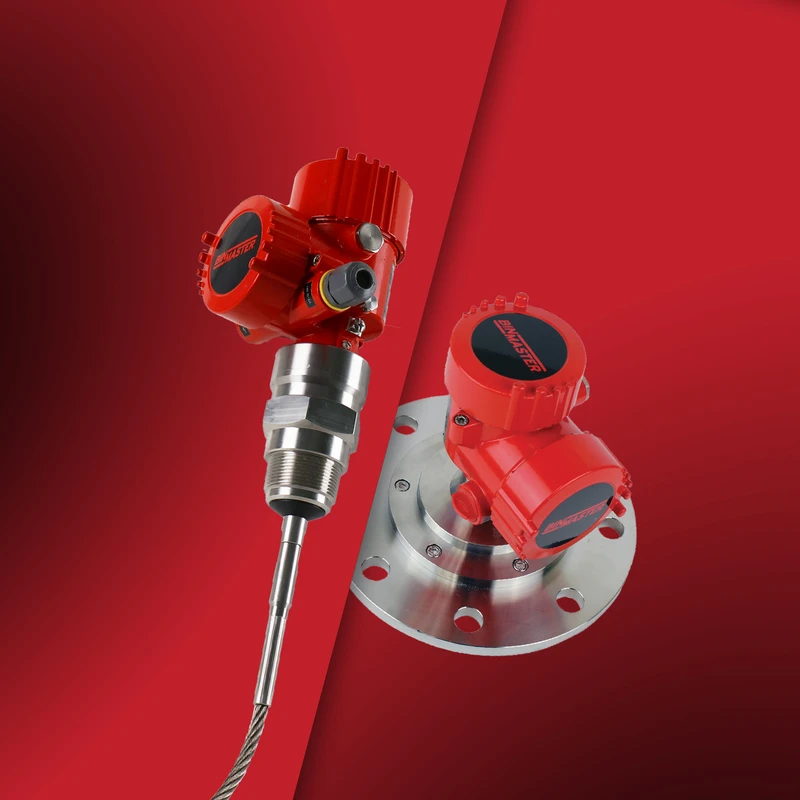
BinMaster offers two guided wave radar models designed for different applications: GWR-2000 for bulk solids and GWR-3000 for liquids & interface measurement.
Both sensors provide dependable level measurement and integrate easily with PLCs, HMIs, and inventory monitoring software such as BinCloud® and Binventory®.
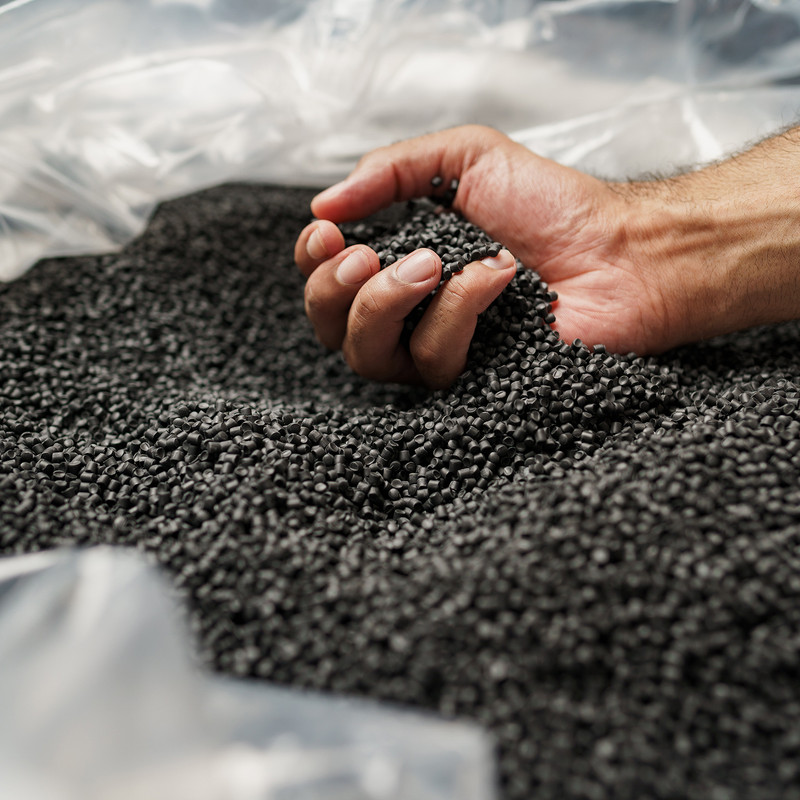
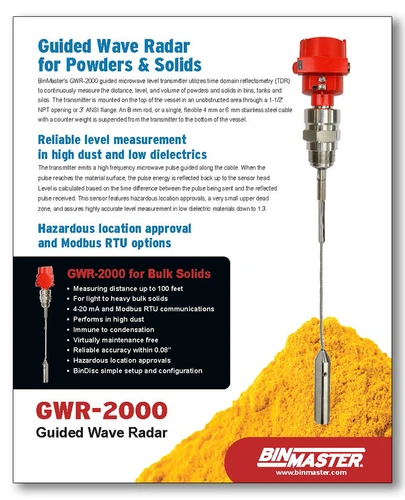
The GWR-2000 provides highly accurate continuous level measurement for powders & bulk solids in vessels up to 100 ft. tall.
Typical Applications for the GWR-2000
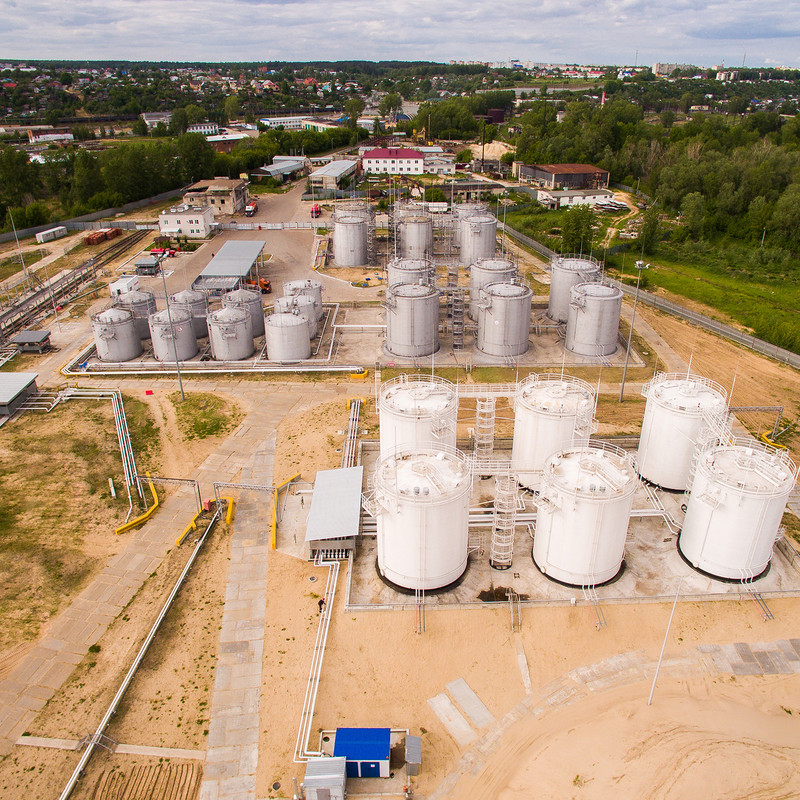
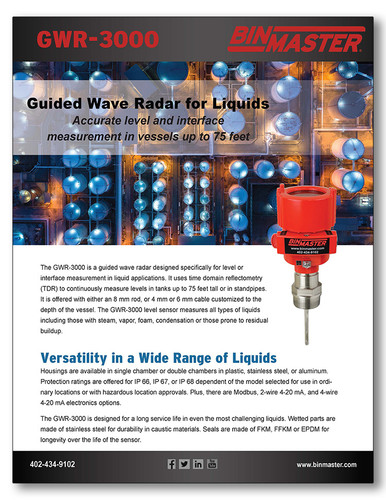
The GWR-3000 is designed for liquid level and interface level measurement in tanks, standpipes, or separators. It continuously measures liquids up to 75 ft. with an accuracy of ±0.08 inches.
Typical Applications for the GWR-3000
| GWR-2000 | GWR-3000 | |
|---|---|---|
| Measuring Range | 100 ft. (30.5 m) | 75 ft. (23 m) |
| Accuracy | ±0.08 in (2 mm) | ±0.08 in (2 mm) |
| Process Temperature | -40°F to 392°F (-40°C to 200°C) | -76°F to 392°F (-60°C to 200°C) |
| Process Pressure | -14.5 to +580 psig (-1 to +40 bar) | -14.5 to +580 psig (-1 to +40 bar) |
| Mounting | 1½" NPT opening or 3" ANSI flange | 1½" or 2" NPT threaded, 2" or 3" flange |
| Housing Material | Plastic, aluminum, or stainless steel | Plastic, aluminum, or stainless steel |
| Enclosure Rating | IP66 / IP67 / IP68, depending on housing | IP66 / IP67 / IP68, depending on housing |
| Approvals | CSA / FM Class II, Div 2, Groups E, F, G; other approvals available | CSA / FM Class II, Div 2, Groups E, F, G; other approvals available |
| Output | Two-wire 4-20 mA/HART®, four-wire 4-20 mA/HART®, Modbus RTU | Two-wire 4-20 mA/HART®, four-wire 4-20 mA/HART®, Modbus RTU |
| Dead Zone | Up to 12 in. | 3.15 in. to 7.874 in., depending on rod/cable type and whether measuring water or oil |
Guided wave radar sensors operate using time domain reflectometry (TDR), a measurement method that determines level by measuring the time it takes for a microwave signal to travel to the material surface and back.
The transmitter sends a high-frequency microwave pulse down a guided probe or weighted cable.
When the signal reaches the material surface, a portion of the energy is reflected back toward the sensor.
The transmitter measures the time difference between the transmitted and reflected signals.
This time difference is converted into a precise distance measurement, used to calculate level/volume.
Guided wave radar sensors provide reliable measurements because the guided signal travels directly along the cable or rod, rather than through the vessel space.
Comprehensive diagnostics built into the transmitter ensure reliable operation and simplify troubleshooting when needed.
Measures through dust or airborne particles in the vessel

Resists fluctuations in temperature, pressure, or material bulk density

Provides accuracy in environments with condensation or vapor
Typically unaffected by noise during filling/emptying processes
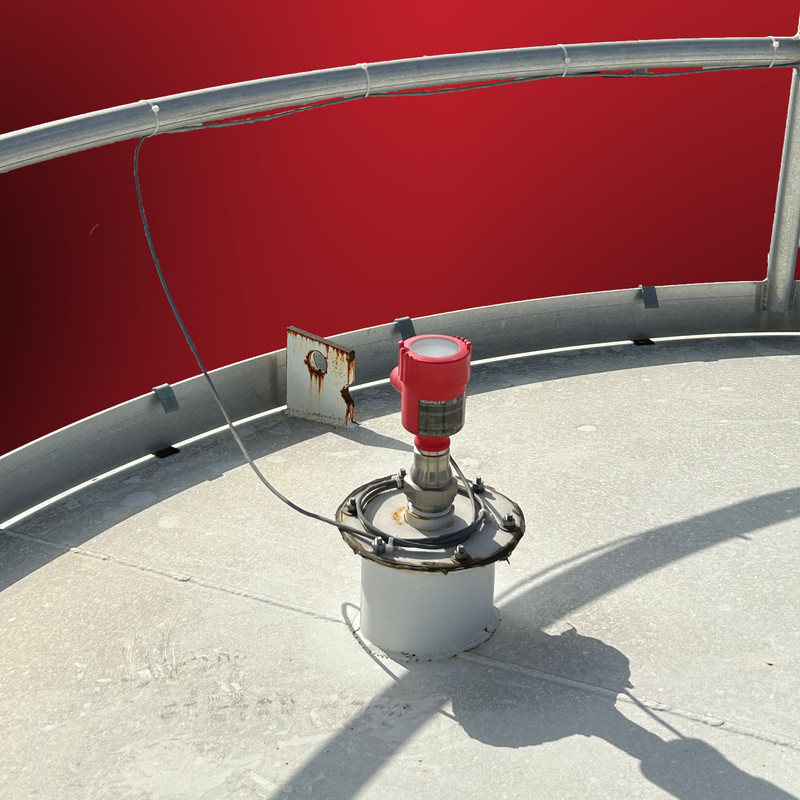
Guided wave radars are typically mounted at the top of the vessel.
BinMaster also offers 1½-inch NPT mounting plates for flat or angled silo roofs in 0°, 5°, 10°, and 30°. For sanitary applications, stainless-steel mounting plates are available.
Probe Options
A solid steel rod probe is used only on shorter tanks.
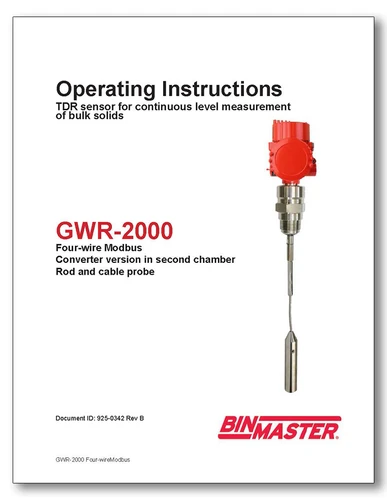
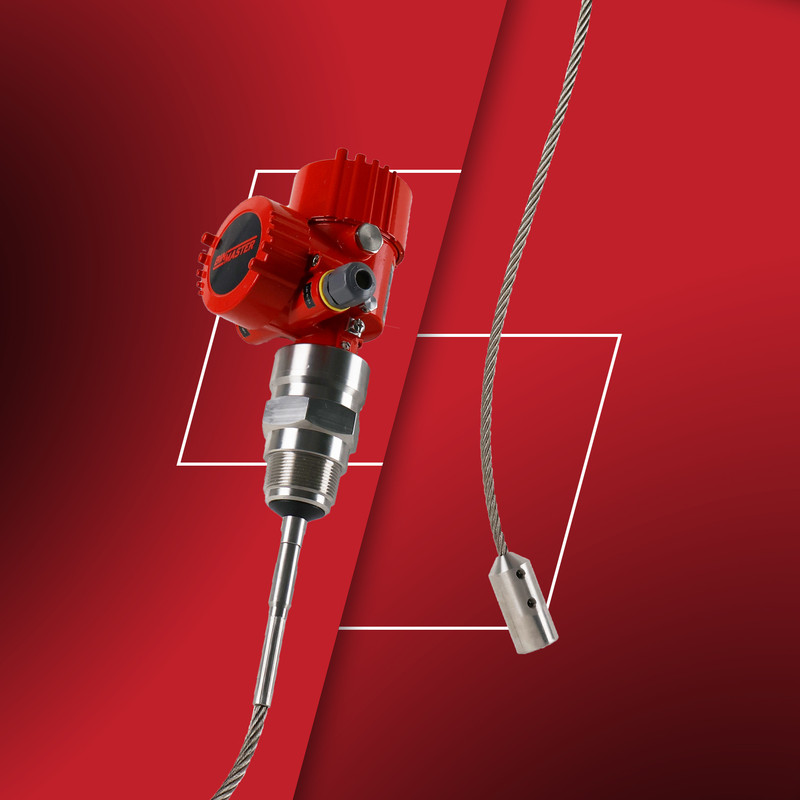
For taller tanks, a flexible stainless-steel cable with a counterweight is suspended from the transmitter to the bottom of the vessel.
Probe options include 4 or 8 mm stainless-steel cable, or a 16 mm stainless-steel rod probe.
BinMaster guided wave radar sensors can be configured using the BinDisc setup interface, which simplifies commissioning and parameter adjustments.
This setup process reduces installation time and ensures consistent configuration across multiple sensors.

Push-button configuration directly on the sensor

Optional Bluetooth connectivity for wireless setup
Ability to move one BinDisc from sensor to sensor

Fast configuration without complex programming
Both guided wave radar and non-contact radar technologies provide accurate level measurement, but each is better suited for specific applications.
Choose guided wave radar when:
Guided wave radar remains most valuable for applications where cable or rod-based measurement or liquid interface detection is required.
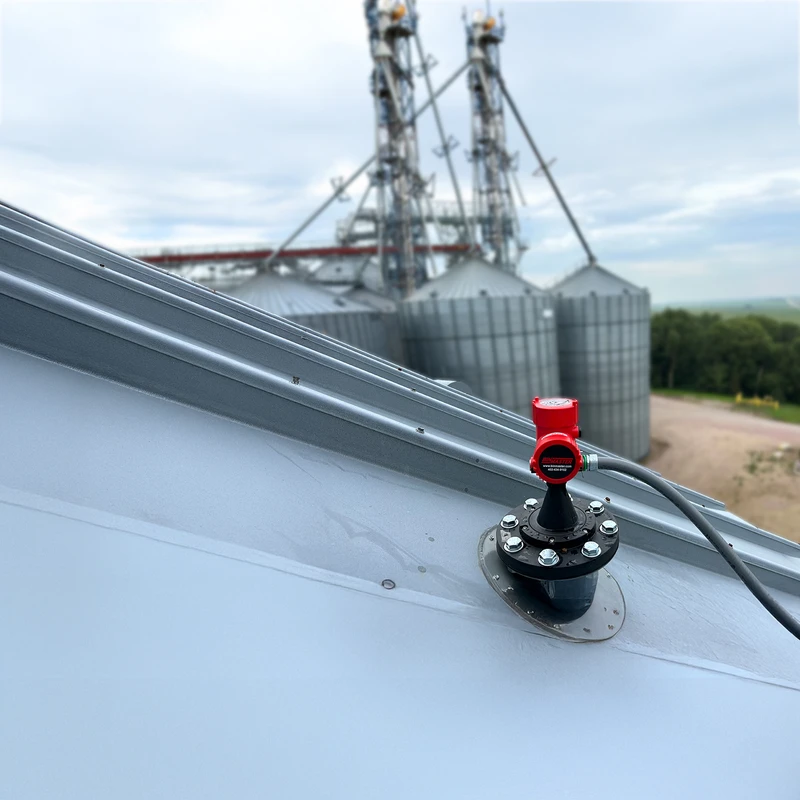
Non-contact radar sensors such as 80 GHz radar transmitters often provide easier installation and lower maintenance because they do not require a rod or cable inside the vessel.
For many modern bulk solids applications, non-contact radar is the preferred solution. Choose radar level sensors when: