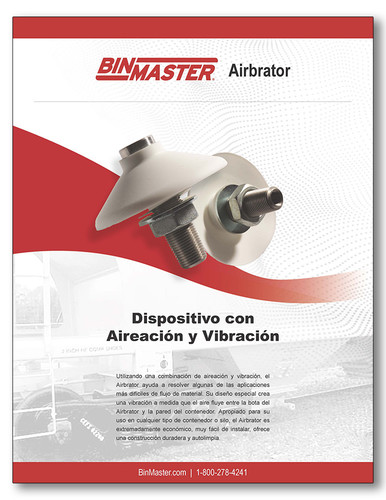

Aeration
Introduces air into stored material to reduce compaction and promote fluidization.




Proper aeration is essential for maintaining the quality and flowability of bulk materials stored in silos, bins, and hoppers. Aeration introduces air into stored materials to prevent compaction, eliminate moisture buildup, and maintain consistent material flow during discharge.
Without aeration, powders and finely ground materials can settle, compact, and cling to silo walls. This can lead to bridging, rat-holing, uneven flow, and costly downtime.
BinMaster offers proven aeration solutions—the Airbrator® silo fluidizer and diffuser air pads—designed to restore airflow within stored materials and ensure reliable discharge of dry bulk solids.

Aeration improves storage conditions and ensures materials flow properly from storage vessels.
It is commonly used in cement plants, grain storage, plastics manufacturing, food processing, mining, and chemical production applications.
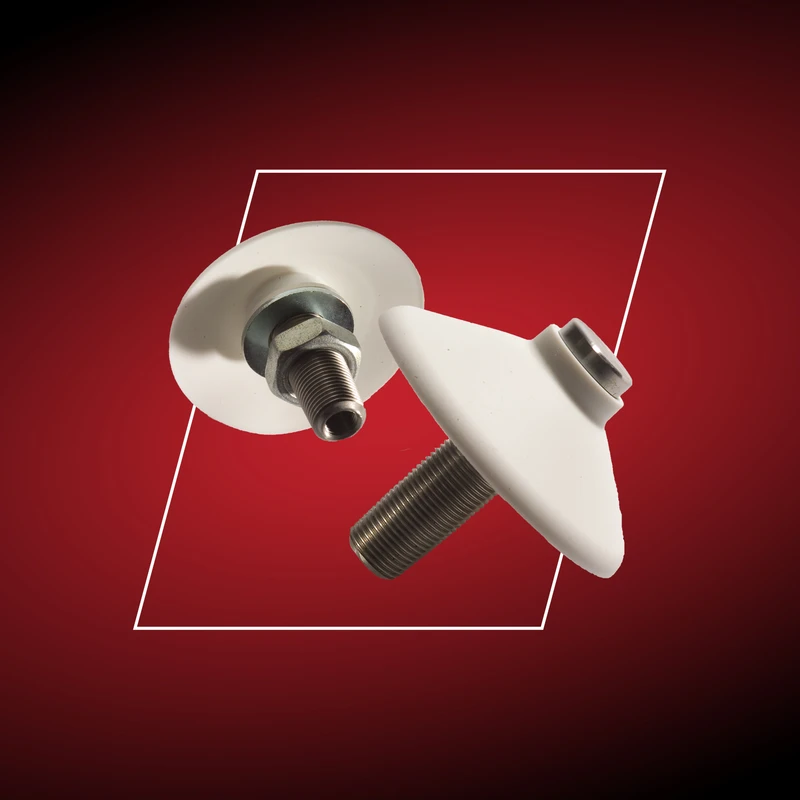
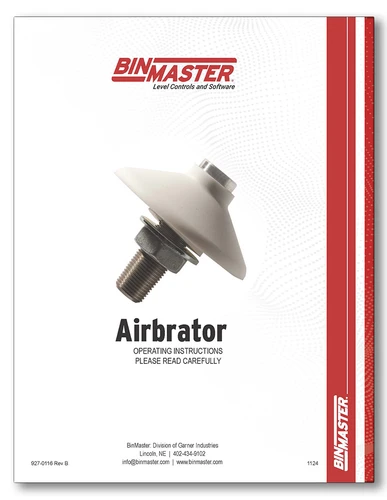
The BinMaster Airbrator® combines aeration and gentle vibration to keep difficult dry bulk materials flowing freely from hoppers and storage vessels.
As compressed air passes between the Airbrator pad boot and the bin wall, the airflow causes the hopper wall to vibrate slightly while simultaneously fluidizing the stored material.
This dual-action flow aid helps break up compacted material and encourages smooth discharge.
Airbrators are designed for easy installation, minimal maintenance, and long service life.
Aeration
Introduces air into stored material to reduce compaction and promote fluidization.

Air Flow
Directs airflow along the bin wall to prevent buildup and improve material movement.

Vibration
Gently vibrates the hopper wall to reduce plugging, bridging, and material packing.

Flexible Air Pressure
Operates with blower air pressures from ranges of 5–60 PSIG for use in many air supply systems.
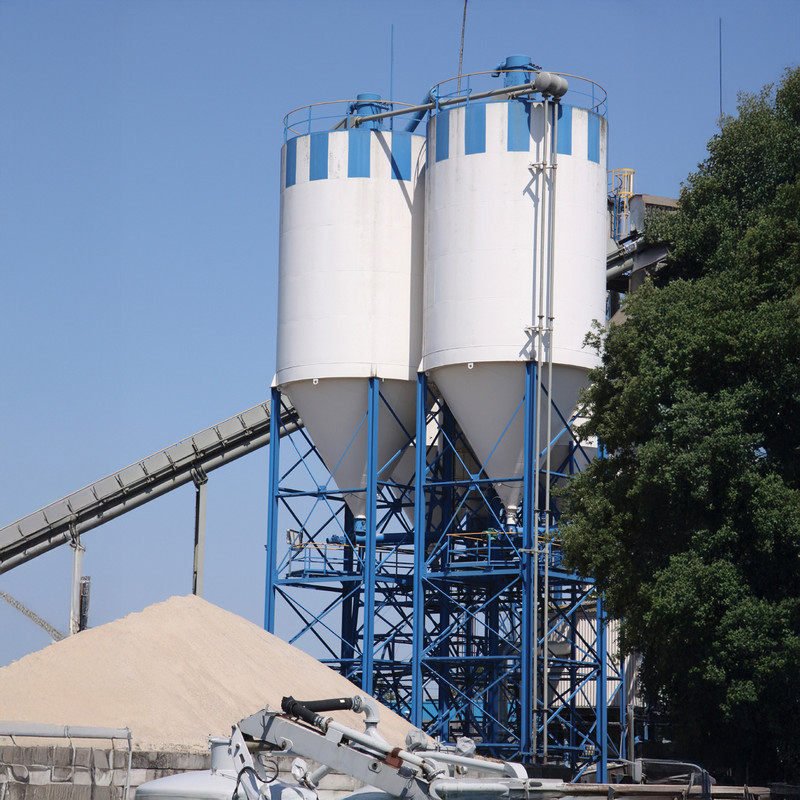
Airbrators are ideal for materials that tend to pack or stick in storage vessels.
They are suitable for indoor or outdoor installations, including high-temperature or corrosive environments.
Common applications include:
| Pad Material | Molded Silicone or neoprene rubber |
| Shaft | Stainless-steel center shaft |
| Process Temperature | Up to 250°F (121°C) |
| Air Pressure | From 5 PSIG to 60 PSIG |
| Air Consumption | Dependent on application |
| Compliance | FDA 21CFR177.2600 (a – e, g, h) |
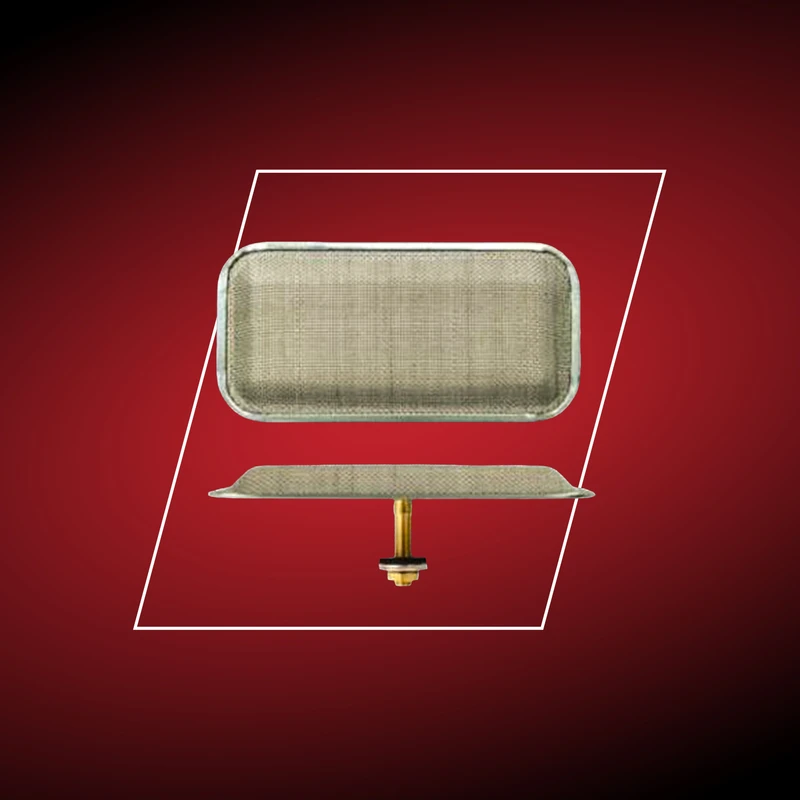
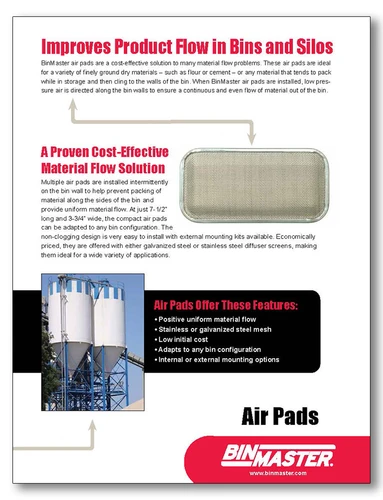
BinMaster diffuser air pads are an economical solution for maintaining the flow of finely ground dry powders that tend to compact during storage.
Installed along the bin wall or in a hopper cone, air pads introduce low-pressure air to fluidize compacted powders and help move material toward the discharge outlet.
Air pads are compact and easy to install, making them adaptable to a wide range of bin sizes and configurations.

When powders are conveyed into a vessel, they contain a mixture of air and particulate matter. Over time, air escapes and material compacts.

Without aeration, powders lose their fluid properties and behave more like compacted solids, increasing the likelihood of flow problems.

Air pads reintroduce air into the material, restoring the air-to-particle mixture and returning material to a fluid-like state that flows easily.
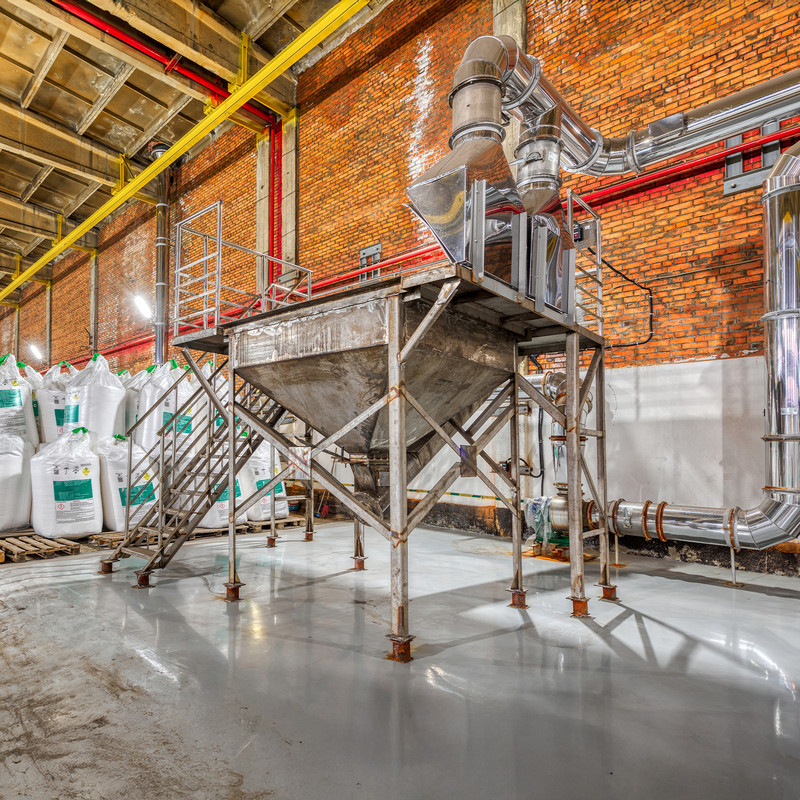
Air pads promote consistent, uniform material flow. Choose from durable models: stainless-steel or zinc-plated steel mesh.
They offer a low initial installation cost and overall cost-efficient operation.
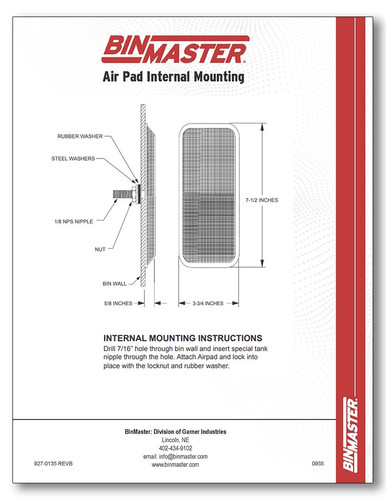
Air pads are adaptable to many bin configurations, with both internal and external mounting options and reliable performance in many materials:
They are particularly effective in hopper cones and along bin walls where material tends to cling or accumulate.

Proper placement ensures the best aeration results.
Typical installation guidelines include multiple rows of air pads along the hopper wall. Four rows—spaced 2” to 15” apart—are common.
Cover the entire problem area with air pads. Position pads so each pad covers approximately a 10” radius.
Consult BinMaster to determine the specific quantity and layout for your unique application.
| Length | 7.5" (190.5 mm) |
| Width | 3.75" (95.2 mm) |
| Height | 0.5" (12.7 mm) |
| Stem Length | 2" (50.80 mm) |
| Body | Zinc-plated steel or stainless steel |
| Diffuser Cloth | Up to 180°F: Cotton canvas Up to 600°F: Fiberglass |
| Diffuser Screen | 16 mesh (Galvanized steel or stainless-steel type 316) |
| Gasket | Neoprene |
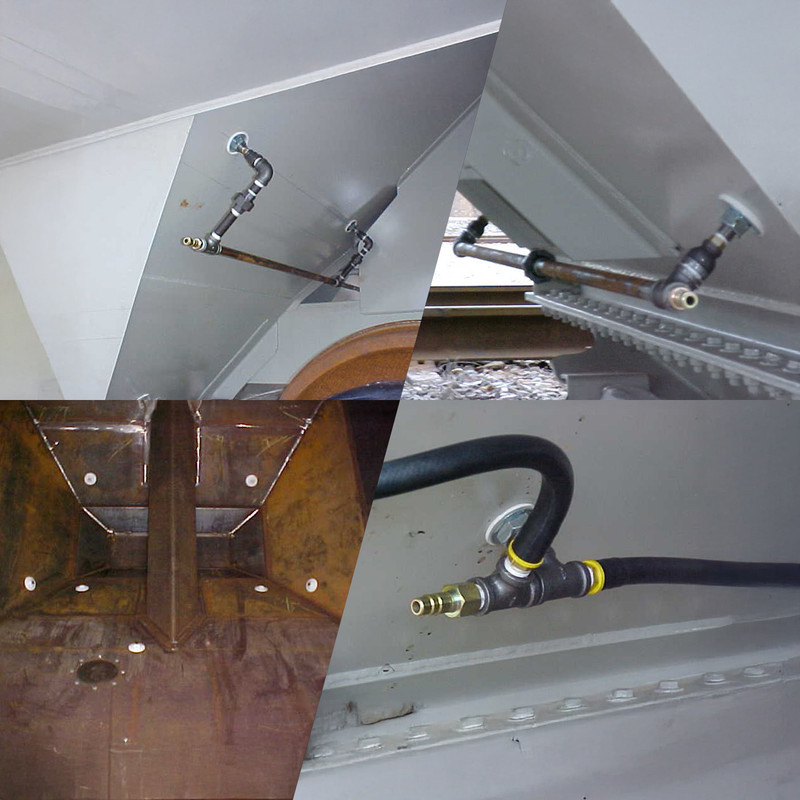
Choosing the right aeration device depends on the material characteristics and severity of flow problems.
Choose Airbrator when:
Choose diffuser air pads when:
In many installations, multiple aeration devices may be used together to ensure consistent material discharge.
Aeration systems help facilities maintain reliable material flow, reduce downtime, and protect storage infrastructure.

Cement and concrete production

Grain and feed processing

Plastics and chemical manufacturing

Food ingredient storage

Mining and minerals processing

Power generation systems
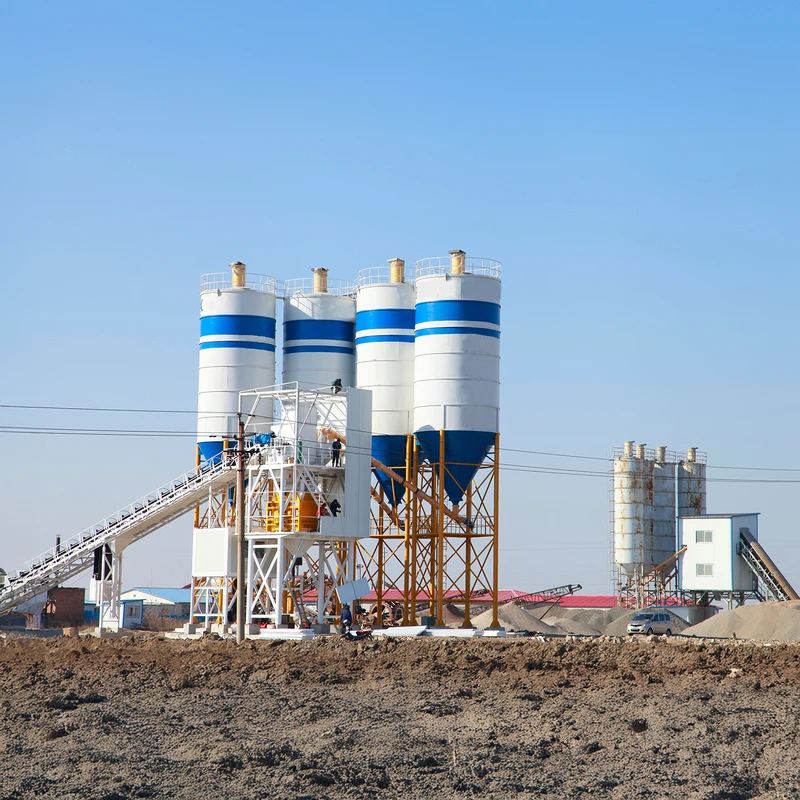
Many bulk storage vessels experience flow issues when materials compact, bridge, or cling to bin walls.
Properly designed aeration systems help facilities maintain consistent flow, reduce downtime, and improve storage efficiency across a wide range of bulk solids applications.
Bridging
Occurs when material forms an arch over the bin outlet. Aeration systems loosen compacted powders to break the bridge.
Rat-Holing
Occurs when material flows only through a narrow channel while surrounding material remains stationary. Air pads or Airbrators introduce airflow along vessel walls to encourage full mass flow.
Material Compaction
Powders lose air over time and compact into a dense mass. Aeration restores airflow to reduce bulk density and improve flow.
Sidewall Buildup
Fine materials may cling to bin walls or hopper cones. Strategic placement of aeration devices keeps materials moving and prevents buildup.
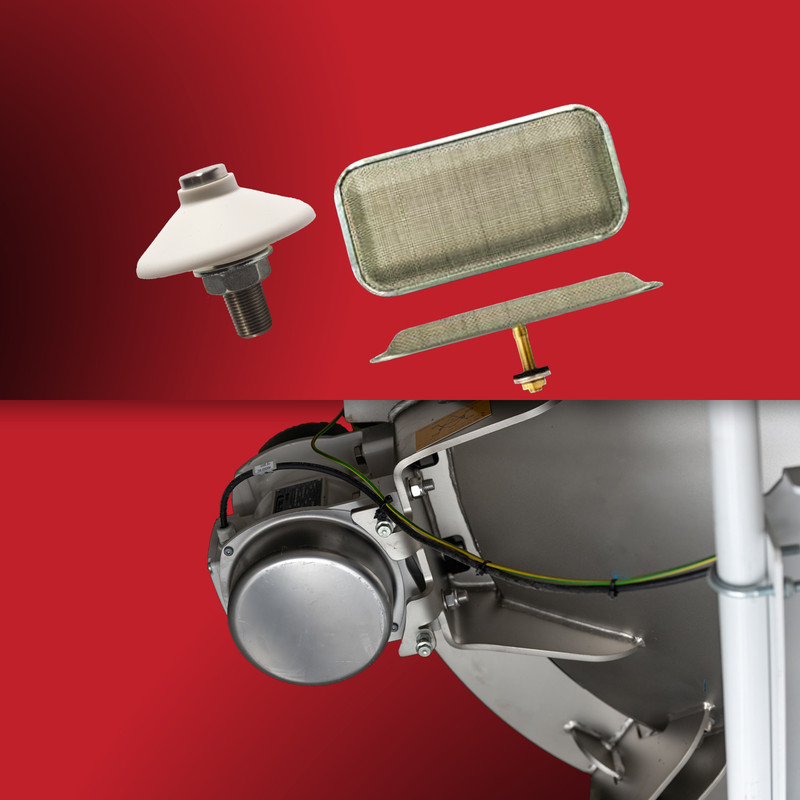
When facing bulk material flow problems, aeration systems are often preferred because they improve material flow by restoring the natural air-to-particle mixture within powders.
Choose aeration when managing fine powders or dry bulk solids that pack or compact during storage, and a gentle flow aid is needed that does not damage equipment or stored materials.
Choose vibrators when in coarse or granular materials where mechanical agitation is required to break material loose from compaction or bridging.
Airbrators are used when severe flow problems occur. When materials are extremely difficult to discharge, both aeration and vibration may be required to restore material movement.
BinMaster offers Airbrator silo fluidizers, air pads, bin vibrators, and level sensors to help maintain reliable flow and provide accurate inventory monitoring.