The store will not work correctly when cookies are disabled.
We use cookies to make your experience better.To comply with the new e-Privacy directive, we need to ask for your consent to set the cookies.Learn more about our cookie policy.
What is bulk density? In simple terms, it’s mass per unit volume of powder, liquid, granules, or any material in a bulk state. When handling solids or powders, a bulk material’s weight is usually stated as lb./ft.³ or g/cm³.
Veteran processors often have their material weights memorized. While BinCloud® software's graphics and easy-to-understand reports seem to generate easily, bulk inventory information is calculated using numerous traits, including vessel size, headspace, and bulk density.
Before COVID-19 and the supply chain crisis, industries relied on savvy just-in-time ordering to minimize carrying costs like warehousing, tied-up capital, product spoilage, and waste. According to Investopedia, such carrying costs represent up to 30% of total material value.
“BinMaster is navigating the same supply chain waves as our customers,” said Scott Hudson, President, BinMaster. “We’re hearing from people who can’t get their materials delivered on a consistent schedule, so they’re really using BinMaster for planning orders. They can’t afford to shut down production because of a bad or outdated measurement.”
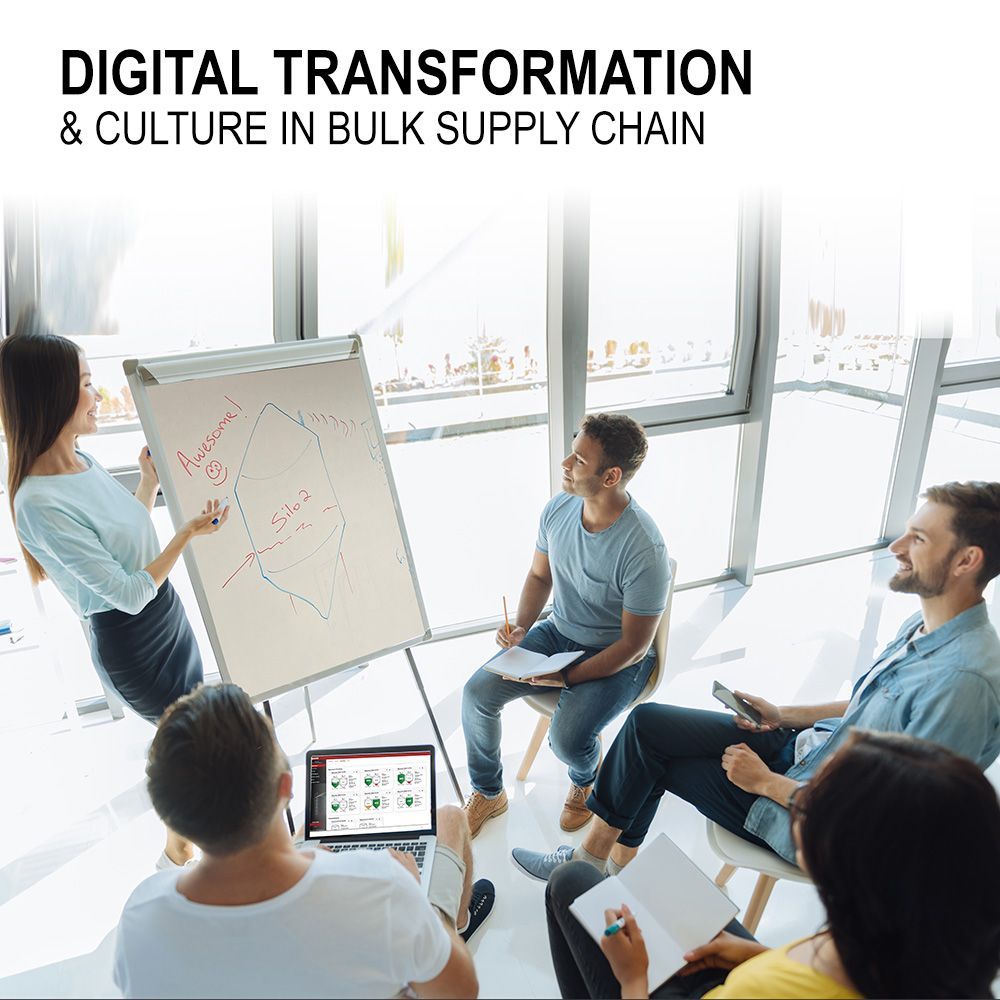
As organizations polish Industry 4.0 tools and processes—including level sensors and software for inventory management—a new focus has emerged that helps companies define ways to benefit employees, sustainability, fairness, and human interaction.
Industry 5.0 benefits from 4.0 achievements regarding industrial automation and process improvements. This new phenomenon points to sustainable, human-centric goals, requiring leaders to ask, “Are we supporting future societal values?”
Organizations face a storm of challenges: the strain of product demand, limited supply chain resources, and an unprecedented exodus of people leaving the workforce. Thankfully, Industry 4.0 technology and systems provide some relief.
Industry 4.0 is a system that combines informational and operational technology to make manufacturing more aware, predictive, and autonomous. Employees operating in a 4.0 environment are highly connected with a more complete view of their business ecosystem. Level sensors and software directly feed the Industry 4.0 atmosphere.
Poultry operations require a variety of bulk materials: everything from liquified fat to lime and grains. A Midwest-based poultry feed mill faced a tedious and manual inventory process before BinMaster brought a solution.
Raising livestock requires tight control of what materials are ordered, how long feed is stored, and when feed is running out and needs to be restocked. Sensors and software help track all three.
Ethanol operations face plenty of challenges when it comes to bulk inventory measurement. Dust, accuracy, and reliability all must be considered with raw material storage.
BinMaster's case study looks at extreme amounts of dust. For this operation, silos experienced fill rates of up to 580 tons per hour; the dust created by filling made it extremely difficult for the producer to track the filling and emptying processes.
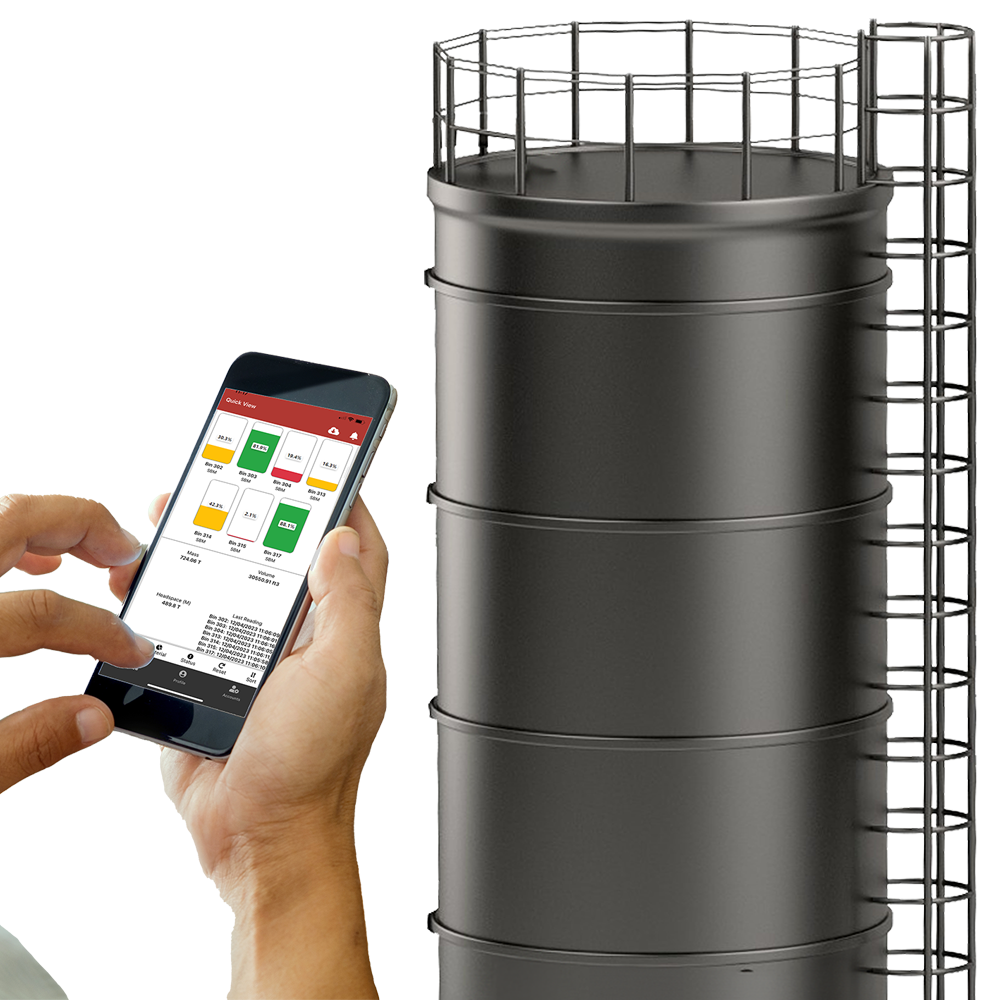
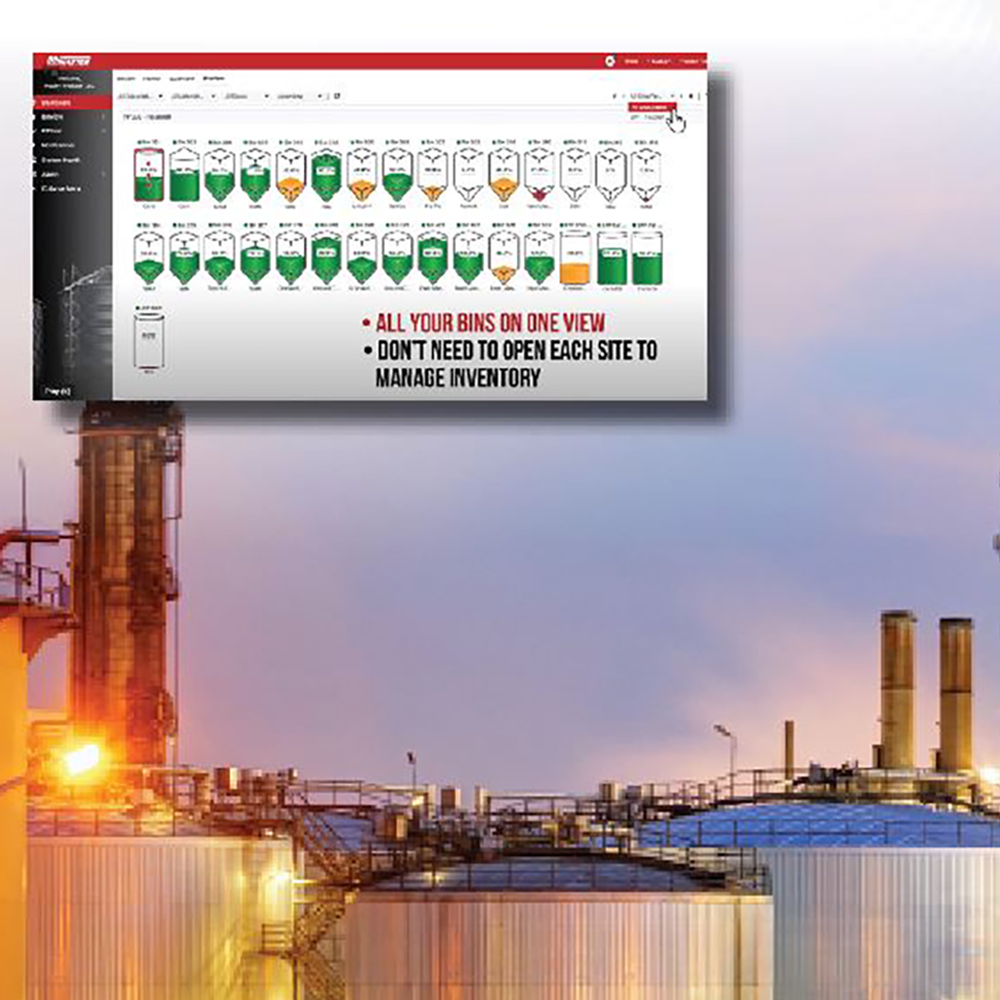
Monitor inventory in bins, tanks, or silos and organize it in one place with BinCloud®. New features released in BinCloud make inventory management evermore easier, more intuitive, and more convenient.
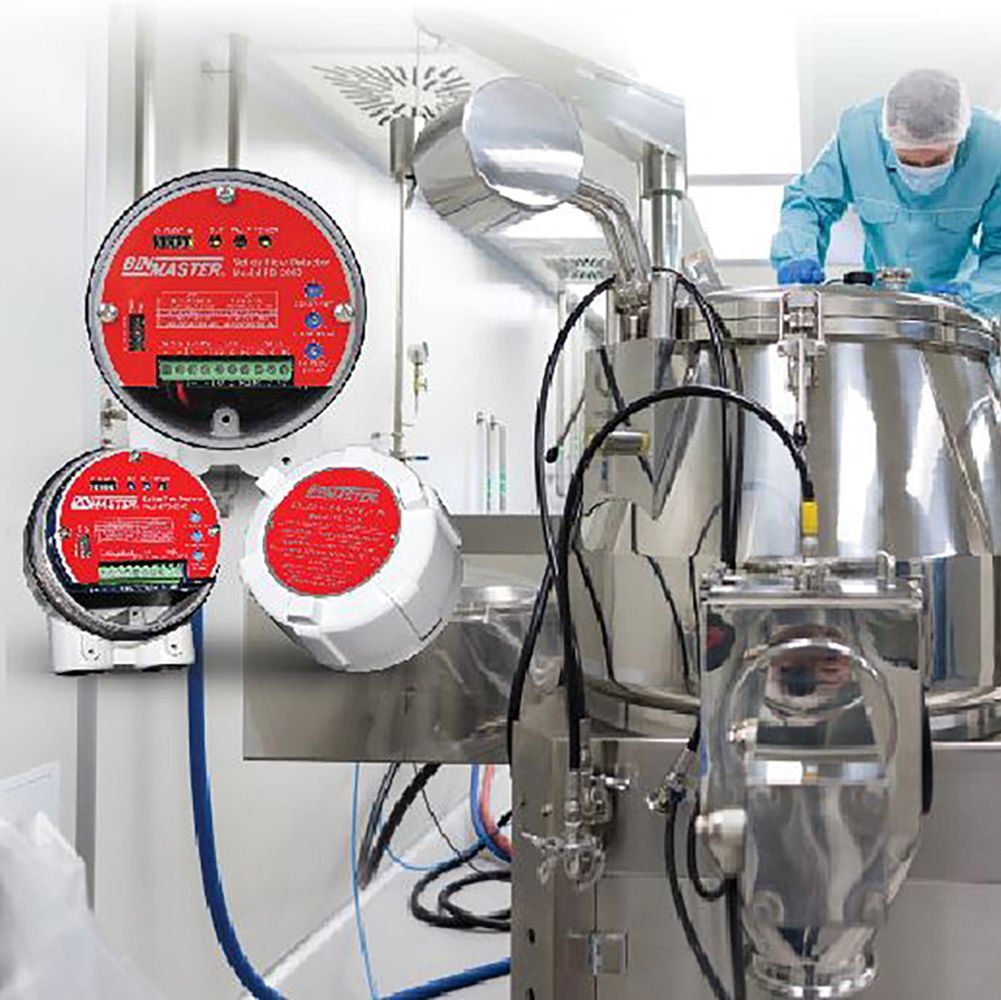
Level sensors play a large role in helping operations access bin level measurements safer, smarter, and more accurately—from grain storage and handling to cement manufacturing and every industry in between.
BinMaster offers a variety of level sensors—including non-contact radars, 3D scanners, plumb-bobs, and lasers—that collect measurements and transmit bulk inventory data to cloud-based applications.
Sometimes stories illustrate solutions. Using sensors and cloud software called CementView®, a major concrete company reduced material shortages and simplified life for drivers and dispatchers.
Read the story of how a company with ten ready-mix plants automated the monitoring processes of 58 silos containing cement powder, IPF, and fly ash. CementView keeps dispatchers informed. Using a PC, tablet, or phone, dispatchers can monitor inventory for each silo and plant location by stored bulk material. Automatic text and email messages send alerts when it's time to restock.
Up and down. Up and down. Measure, measure, measure.
While BinMaster’s SmartBob® sensor provides a sturdy, accurate method of measuring grain in a silo, it’s no replacement for a trusty yo-yo, where a user can perform "walk the dog" or "flying saucer" tricks. However, the SmartBob does resemble an automated yo-yo by dropping a sensor down to the bulk material, then withdrawing back to the spool.
Sturdy’s the word: many of the original SmartBobs have been operating for more than 25 years.
Now more than ever, manufacturers expect—and must navigate—volatile supply chains and pricing. Effective bulk material management begins with smart systems that make data easily accessible, which ultimately helps strengthen inventory control. Level sensors and software from BinMaster help...
As demand grows and trends balloon in the food & beverage industry, the pursuit of peak efficiency may feel never-ending. Compliance with health and safety standards continues to remain of the highest importance as plants expand and multi-national systems require robust remote monitoring software....
Level sensors and bin scales have their own unique applications. Utilizing both in one inventory management system provides many benefits, including real-time monitoring and redundancy to verify the accuracy of measurements. But in which situation or conditions is each method of measurement best...
As of November 10, 2025, Garner Industries LLC will operate under a new name: BinMaster Sensors and Technologies LLC. The new name reflects the company’s continued growth, innovation, and commitment to delivering advanced sensors, software, and technologies that help customers make smarter, safer,...